
When you shop quartz countertops, thickness sounds like a simple spec. In real kitchens and baths around Milwaukee, WI, thickness affects how your countertop looks at the edge, how it spans over cabinets, and what your installation needs for long-term stability. K.G. Stevens fabricates and installs quartz locally, so they see the same issues come up across remodels, new builds, and commercial projects: overhangs that need support, islands that need a thicker visual, and design plans that do not account for edge details until the last minute.
Before you pick a slab, it helps to understand what “standard” quartz thickness means, how it changes the finished look, and where you can make smart choices without creating extra complexity.
The Standard Quartz Thickness Options: 1.2 cm, 2 cm, and 3 cm
Quartz slabs are commonly available in three thickness categories:
- Ultra-thin: 1.2 cm (about 1/2 inch)
- Thin: 2 cm (about 3/4 inch)
- Thick: 3 cm (about 1 1/4 inches)
These measurements describe the slab itself, not the finished countertop height once installed on cabinets.
Where each thickness is typically used
- 1.2 cm: Often used for vertical applications, decorative panels, and some modern designs where a slim profile is part of the look.
- 2 cm: Common for countertops when paired with an edge build-up (more on that below). It is also frequently used for backsplashes and vertical features.
- 3 cm: A frequent choice for kitchen counters and islands where you want a thicker edge without added build-up steps.
Pro tip: If you love a clean, thin look, confirm your edge profile early. A thin slab with the wrong edge can look unfinished from across the room, especially on an island.
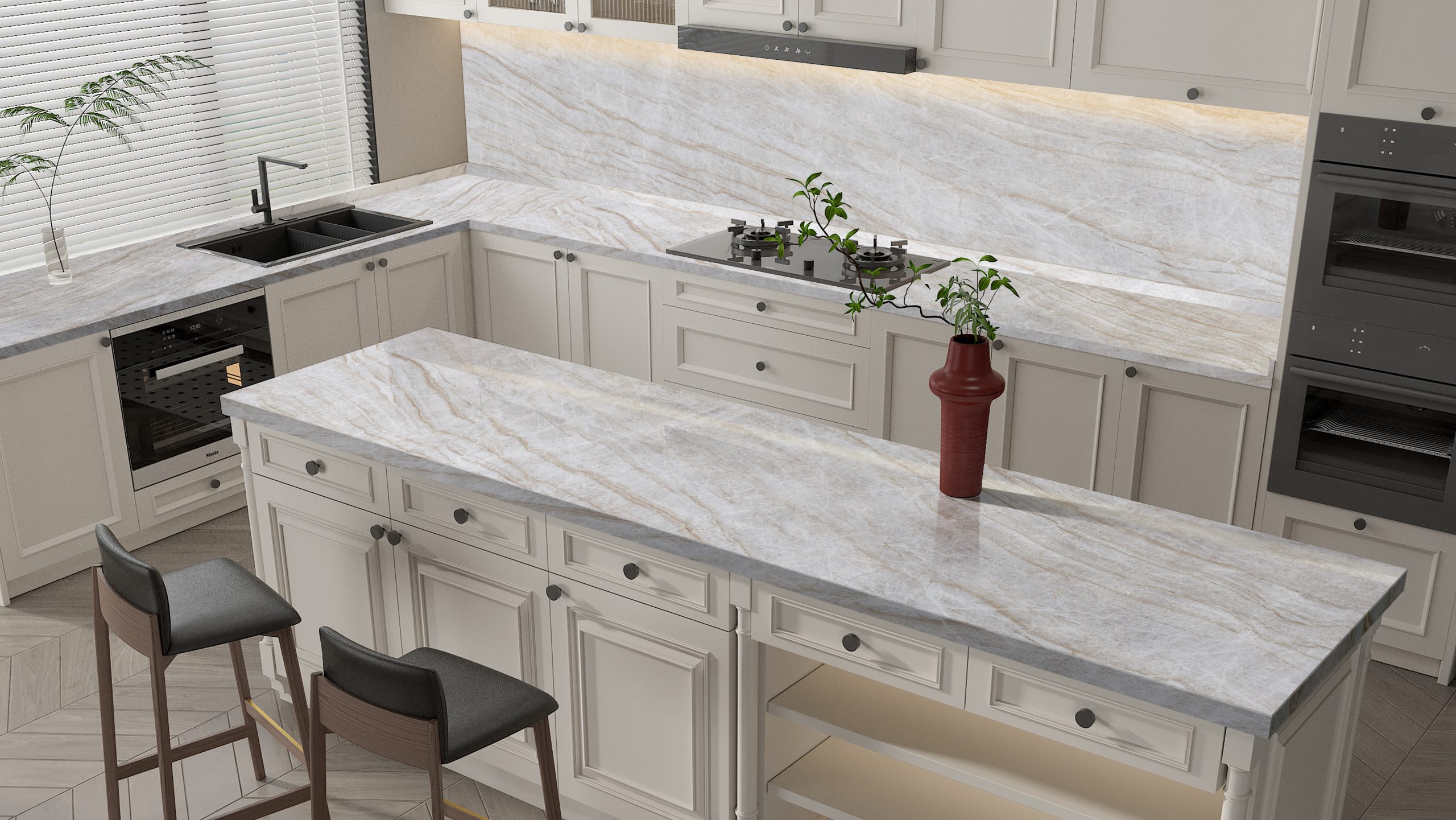
2 cm vs 3 cm Quartz: How to Decide Based on Your Layout
For most Milwaukee-area kitchens, the 2 cm versus 3 cm decision comes down to these factors:
1) Visual weight at the edge
A 3 cm countertop reads more substantial on perimeter runs and islands. It pairs well with traditional, transitional, and many modern farmhouse kitchens.
A 2 cm slab can look just as strong when it is paired with a built-up edge.
2) Overhangs, spans, and support planning
Thinner slabs can require additional support depending on overhang length, cabinet design, and how the countertop will be used.
This matters on island seating, desk-height counters, and long runs where the countertop bridges open space.
3) Project type
- Busy family kitchen: 3 cm is often the simpler path because it reduces edge construction choices.
- Bathroom vanity: 2 cm can be a practical fit, especially if you want a lighter visual profile.
- Commercial work: Thickness decisions should align with durability needs and the look the space is aiming for.
Pro tip: If your island is a homework and entertaining hub, plan the thickness decision together with your overhang depth and seating layout. Those three choices should match.
Edge Build-Ups: How You Get a Thick Look Without Choosing a Thick Slab
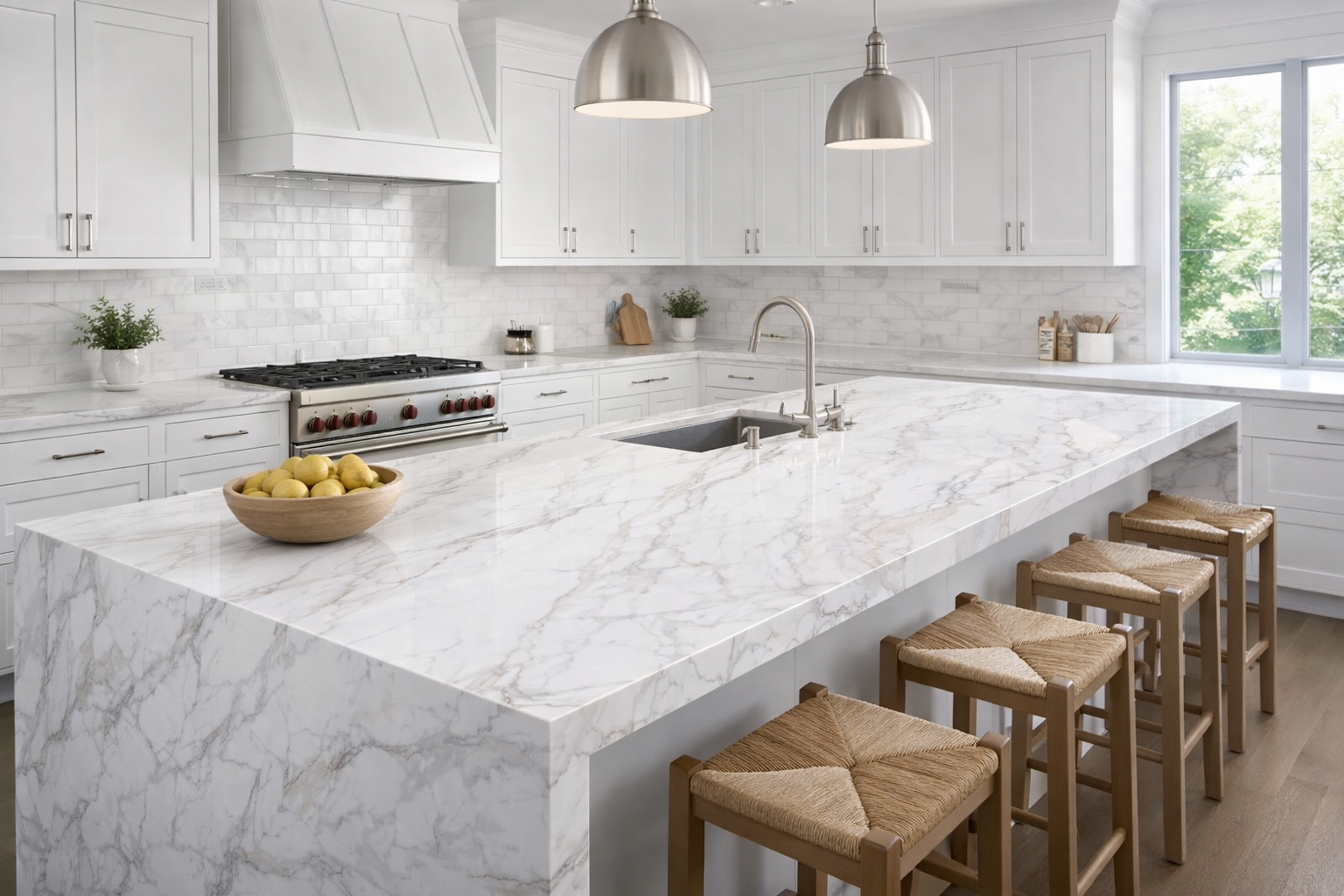
A common strategy with 2 cm quartz is a laminated (built-up) edge, where the fabricator builds the front edge to create the look of a thicker countertop.
This is useful when:
- You want a thicker, furniture-style edge on an island
- You want a consistent “thick” look across multiple areas
- You are trying to match an existing countertop profile in another part of the home
What to check before you commit
- Which edge profiles are compatible with a build-up
- Whether seams or pattern transitions will be visible at the edge
- How corners and radius details will be finished
Pro tip: If you choose a quartz pattern with bold veining, ask your fabricator how the veining will wrap around the edge. This is where a countertop can look clean or look patched.
For edge planning help, start with K.G. Stevens’ quartz resources and showroom guidance: Quartz Countertops.
Practical Pro Tips for Milwaukee Homeowners and Builders
Plan thickness around your sink and faucet decisions
Your sink style and faucet layout affect cutouts and spacing. Lock those choices in before templating so thickness and edge planning stay on track.
Match thickness to the cabinet style
A sleek slab on ornate cabinets can feel mismatched. A thick-looking edge on flat-panel cabinets can feel heavy. Use thickness to support the cabinet style, not fight it.
Think about islands differently than perimeter counters
Many homeowners want a thicker edge only on the island for a focal point. That can be done with smart edge planning, even if perimeter counters stay simple.
Confirm your installer’s process
K.G. Stevens operates out of a large fabrication facility in Milwaukee and recommends scheduling a visit so you can review options in person.
If you want a second perspective on how thickness affects design and function, this related post is useful: The Truth About Quartz Thickness: When And Why It Matters.

Get Quartz Thickness Right Before Fabrication Starts
Choosing quartz thickness is one of those decisions that is easy to rush and hard to change later. If you’re remodeling in Milwaukee, WI or working on a new build nearby, K.G. Stevens can help you compare 2 cm and 3 cm options, plan edge details, and choose a thickness that fits your layout and your daily use.
Next steps:
- Schedule a Showroom Visit
- Explore planning tips on the K.G. Stevens Blog
Start with quartz options here: Quartz Countertops

