
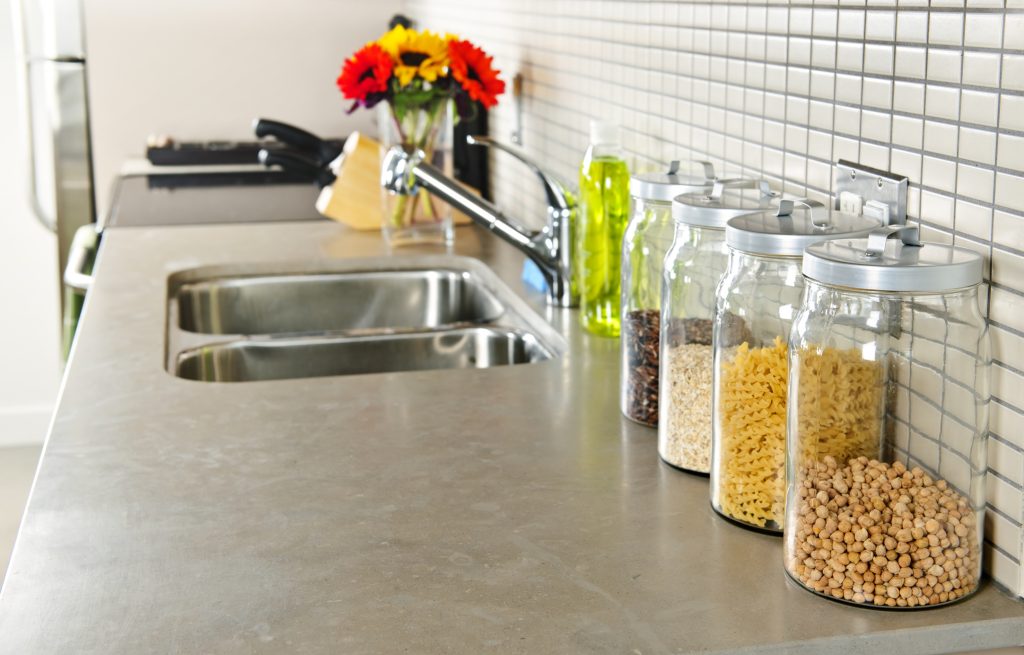
Homeowners across Milwaukee and southeastern Wisconsin are asking that question more often, and for good reason. Soapstone has a quiet, understated look that fits both historic bungalows and new builds, and it behaves differently than the granite and quartz most people are used to.
At K.G. Stevens, we fabricate and install soapstone for kitchens and bathrooms throughout our Milwaukee, Madison, Oshkosh, and Rockford service area. Here is what we tell our customers before they commit to this natural stone countertop.
What Makes Soapstone Different
Soapstone is a metamorphic rock made mostly of talc, which gives it a soft, velvety texture unlike anything else on our showroom floor. Colors run from pale gray to deep charcoal, often with soft veining running through the slab.
Unlike granite or marble, soapstone is naturally dense and largely non-porous. Liquids do not soak into the surface the way they can with other stone countertop types, and it resists staining without the sealing routine that many natural stones require.
Compared to quartz surfaces, which are engineered and highly uniform, soapstone offers genuine one-of-a-kind variation. No two slabs read exactly the same, which is part of the appeal for homeowners who want something that cannot be mass produced.
It is also softer than granite or quartzite, so it will show scratches and small dents over time. Most of our customers see this as part of the material’s character rather than a flaw.
How Soapstone Develops Its Signature Patina
Soapstone changes as it ages. Fresh from fabrication, it typically has a matte gray finish. With handling, oil from cooking, and simple use, the surface gradually darkens and develops a rich patina.
Some homeowners speed this along by applying mineral oil early on, which evens out the color and deepens the tone right away. Others let the countertop darken naturally over months of use.
Either approach is normal. There is no wrong way to let a soapstone counter mature, and the variation from one kitchen to the next is part of what makes each slab unique.
Best Countertop Professionals
Is Soapstone the Right Countertop Material for Your Milwaukee Kitchen?
Visit our 8,000 square foot Milwaukee showroom and see soapstone slabs in person before you decide. Schedule your free countertop consultation with K.G. Stevens today, and let our team help you find the right stone for the way you actually use your kitchen.
Everyday Care for Soapstone Countertops
Soapstone is genuinely low maintenance compared to many stones on our floor. Warm water and a mild soap handle most daily messes, and there is no acid etching to worry about the way there is with marble.
Because it is heat resistant, soapstone tolerates hot pans reasonably well, though we still recommend a trivet for anything straight off the stove. Sharp knives and heavy impacts are the bigger risk, since the stone is softer and can scratch or chip.
Pro Tip: Keep a small bottle of food-grade mineral oil under the sink. A light wipe every few weeks in the first year helps the patina develop more evenly, especially around the sink and cooktop where use is heaviest.
For a broader look at how soapstone compares to other materials in daily use, our care and maintenance guide walks through cleaning routines for every stone type we carry.
Is Soapstone Right for Your Home?
Soapstone tends to suit homeowners who want a natural material with minimal upkeep and do not mind watching a surface change character over the years. It is a strong fit for busy kitchens, bar tops, and bathroom vanities alike.
Because soapstone runs in cooler gray and charcoal tones, it tends to pair well with warm wood cabinetry, black hardware, and farmhouse sinks, a combination we see often in kitchens across Milwaukee and Madison.
Visit our 8,000 square foot Milwaukee showroom and see soapstone slabs in person before you decide. Schedule your free countertop consultation with K.G. Stevens today, and let our team help you find the right stone for the way you actually use your kitchen.