
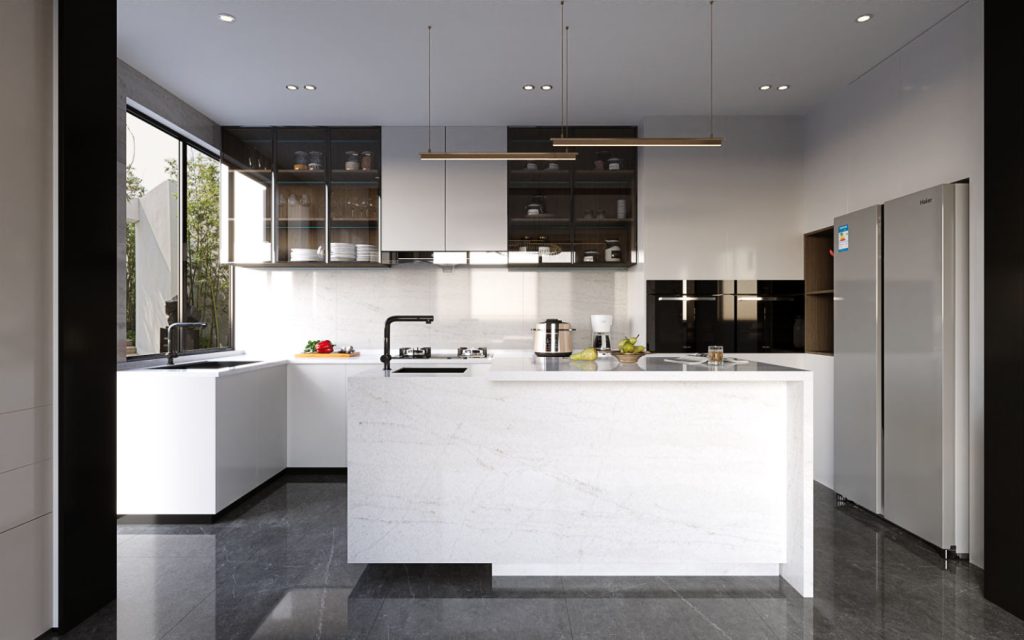
Smart home technology has made its way into kitchens across the country, and countertops are now part of that conversation. From integrated charging stations to embedded displays and sensors, so-called smart countertops promise convenience and connectivity. For homeowners in Milwaukee, WI, the real question is whether these features add lasting value or introduce complexity where it is not needed.
When planning a kitchen renovation or new build, understanding how smart countertops compare to traditional surfaces helps homeowners, designers, and builders make informed decisions.
What Are Smart Countertops and How Do They Work?
Smart countertops typically combine a surface material with embedded technology. Common features include wireless charging zones, touch controls, temperature indicators, or integration with other smart home systems.
These features are usually built into engineered materials or paired with modular inserts. The countertop itself still needs to function as a work surface, which means durability, installation quality, and long-term maintenance matter just as much as the technology.
For Milwaukee homeowners, where kitchens are used heavily throughout the year, the countertop must perform reliably in daily tasks before any added features are considered.
Pro tip: Ask whether smart features can be serviced or replaced without removing the entire countertop. This affects long-term practicality.
How Smart Countertops Compare to Proven Materials
Traditional countertop materials like quartz and granite continue to dominate the market. According to industry data from 2023 through 2025 published by the National Kitchen and Bath Association, quartz and granite together account for well over two thirds of new kitchen countertop installations.
These materials succeed because they focus on fundamentals. They handle daily use, resist common damage, and fit a wide range of kitchen designs. Smart countertops, by contrast, are still a niche option.
In Milwaukee homes, buyers often prioritize surfaces that will not require specialized service or proprietary parts years down the road. This is one reason many designers recommend keeping technology separate from permanent surfaces.
You can explore traditional countertop options here:
https://kgstevens.com/countertops/
https://kgstevens.com/quartz/
https://kgstevens.com/granite/
Practical Considerations for Milwaukee Area Kitchens
Milwaukee kitchens experience heavy seasonal use, from holiday gatherings to daily family meals. Countertops need to handle heat, spills, and cleaning without added restrictions.
Smart countertops may require specific cleaning methods to protect embedded components. Repairs may involve both a fabricator and a technology specialist. These factors can complicate ownership.
By contrast, traditional countertops are serviced by local fabricators who understand Wisconsin homes and construction practices. This local support matters when adjustments or repairs are needed.
Pro tip: If you like the idea of smart features, consider adding them through appliances or accessories rather than embedding them into the countertop itself.
Cost Versus Long-Term Value
Smart countertops often come with higher upfront costs due to technology integration and specialized fabrication. The challenge is determining whether that cost translates into long-term value.
In the Milwaukee housing market, buyers tend to recognize and trust established materials. While smart features may appeal to some, they do not yet carry the same broad market recognition as quartz or granite.
For homeowners planning to stay long-term, reliability often outweighs novelty. Builders and designers also consider how features will be perceived by future occupants.
Installation and Support Matter More Than Features
Whether choosing a smart countertop or a traditional surface, installation quality remains critical. Poor installation leads to problems regardless of how advanced the material or technology may be.
Working with a local fabricator ensures accurate templating, proper support, and clear communication. This is especially important if technology is involved, as coordination between trades becomes more complex.
K.G. Stevens provides fabrication and installation services with a focus on long-term performance. Their experience with quartz, granite, and other surfaces helps homeowners avoid unnecessary complications.
For insights on countertop planning and trends, homeowners can explore the K.G. Stevens blog:
https://kgstevens.com/blog/
Are Smart Countertops the Right Choice for Your Project?
Smart countertops may make sense in specific situations, such as showcase kitchens or tech-forward commercial spaces. For most Milwaukee area homes, however, proven materials paired with thoughtful design offer more reliable value.
Designers often recommend focusing on layout, lighting, and material selection rather than integrating technology into permanent surfaces. These elements age more gracefully and are easier to update over time.
Pro tip: Think about how your kitchen will function ten years from now, not just how it looks today.
Making a Confident Countertop Decision
Choosing a countertop is about balancing daily use, long-term ownership, and support. While smart countertops introduce interesting possibilities, they also introduce variables that many homeowners prefer to avoid.
Traditional materials remain popular because they work. When fabricated and installed by experienced local professionals, they support both form and function without added complexity.
Ready to Plan Your Countertop Project?
If you are renovating a kitchen, building a new home, or specifying surfaces for a project in the Milwaukee area, the right guidance makes all the difference. Understanding what adds value now and later helps you avoid costly missteps.
Contact K.G. Stevens to discuss your countertop options and installation needs. Their team works with homeowners, designers, and builders to deliver surfaces that perform reliably and fit real lifestyles.
A smart kitchen starts with smart decisions. K.G. Stevens can help you make them.